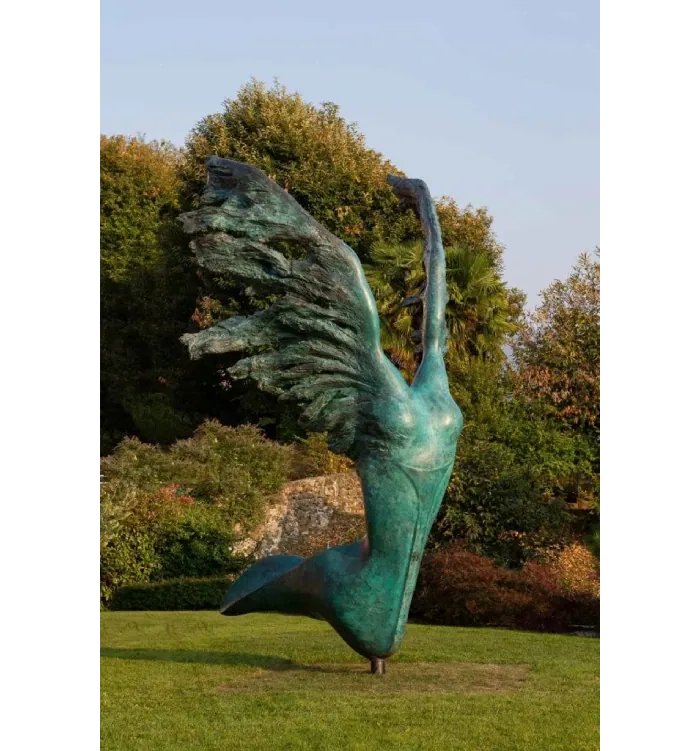
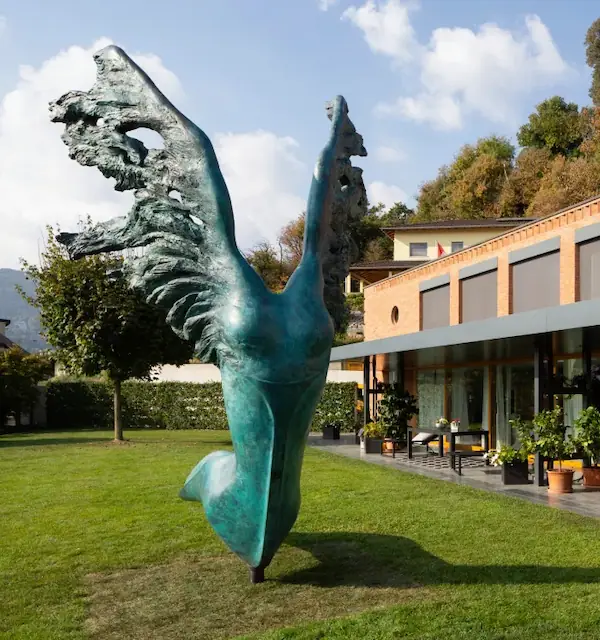
Wings Step by Step

The magic of how a project is born
I took some time in the garden where the work would be located. The view of the lake inspired in me the image of a boat.
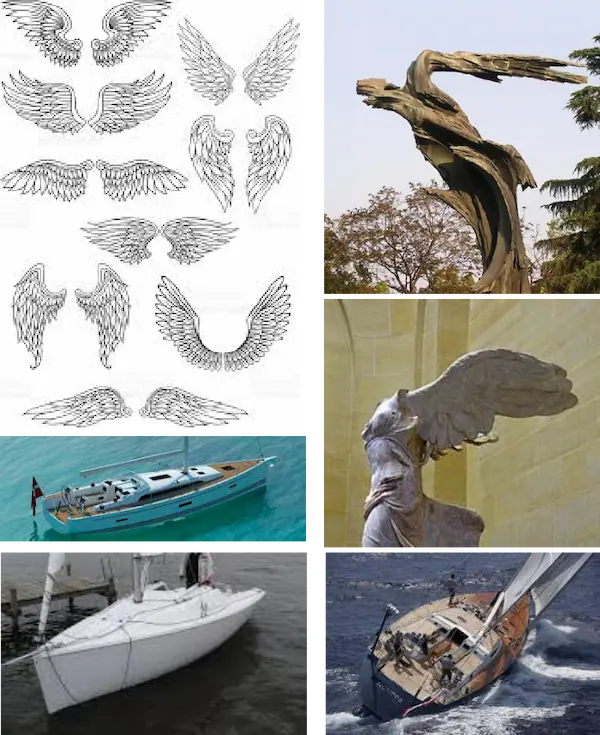
From the first wax sketch appeared the memory of the poet Pablo Neruda's house in Isla Negra, Chile. He collected large figureheads (female wooden sculptures), figures that were placed on the bow of ships (women who encouraged sailors during the long voyage).
That's why I thought about modeling the breasts and transforming the sails into powerful wings for the big enterprise.
I wanted my sculpture-ship-figurehead to be seen at the edge of the water and, at the request of the client, the base became in a place to sit or lie down, and thanks to a steel pin, the sculpture can rotate.
Tests on site
The dimensions and proportions of the work are studied in order to design the structural skeleton and prepare the support for the pivot that will bear the 1,600 kg sculpture.
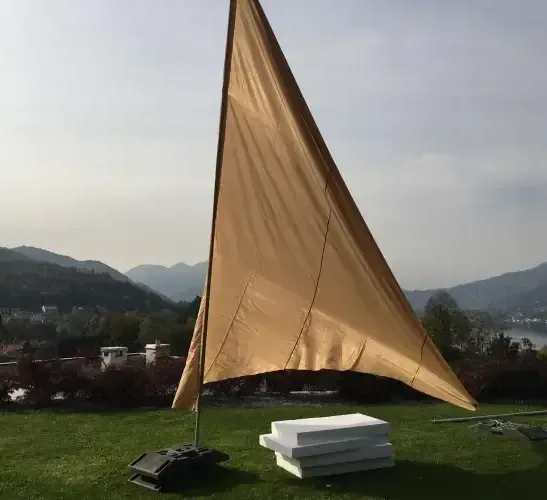
It is important that the work of art be harmoniously integrated into space.
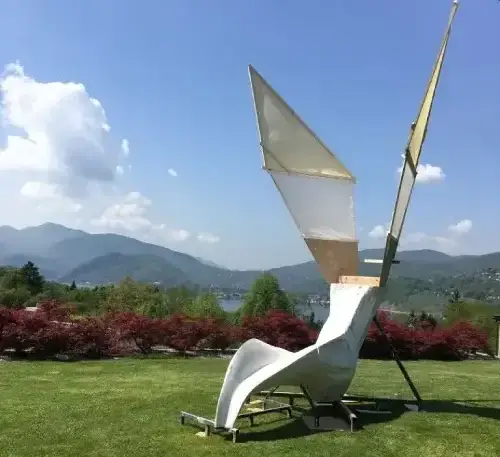
Creation of the first models
The two images correspond to the first researches made in wax.
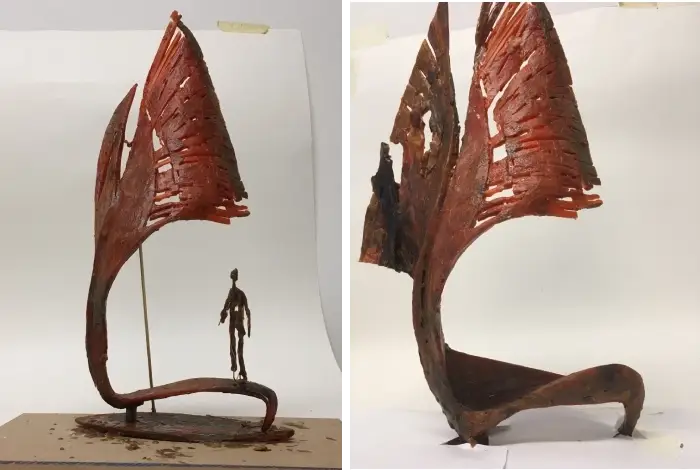
This 1 m high model will serve as a small-scale reference for the final work, which will be 4.50 m.
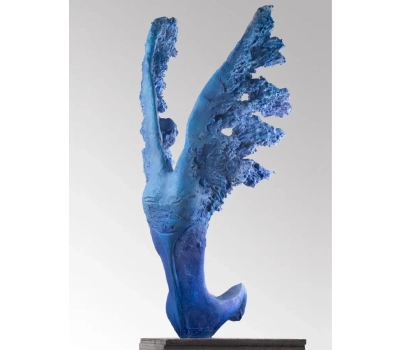
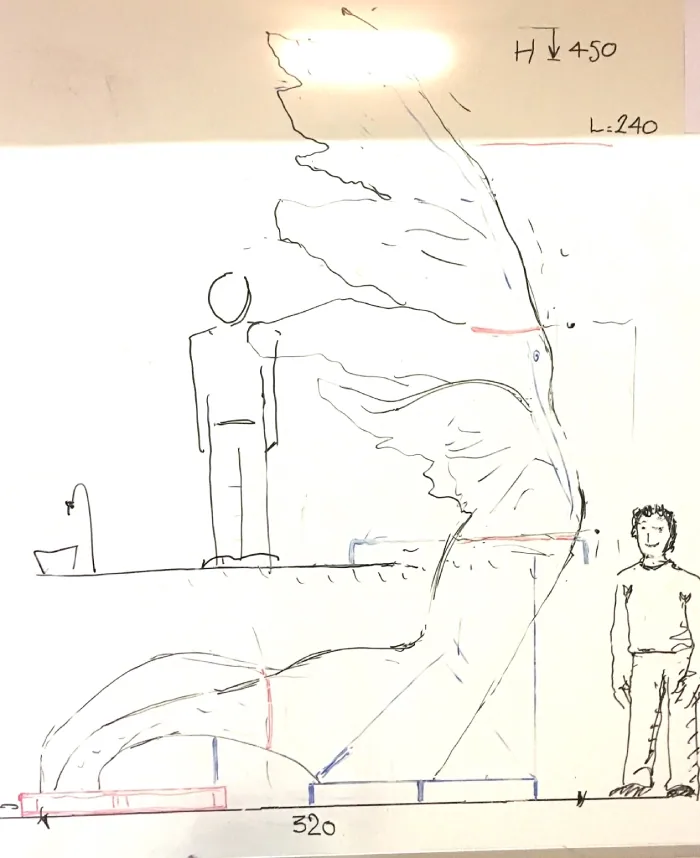
The drawing and the calculations
The project of the work is outlined. The dimensions, the base and the overall structure are considered. The armature is designed so that the plaster model can be taken apart in pieces, to ease transport and the foundry’s work.
Plaster work phase
The sculpture is complete, the proportions are checked and it is dismantled to work on the details.
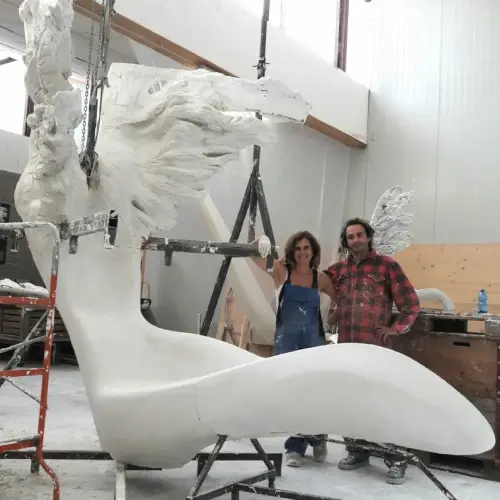
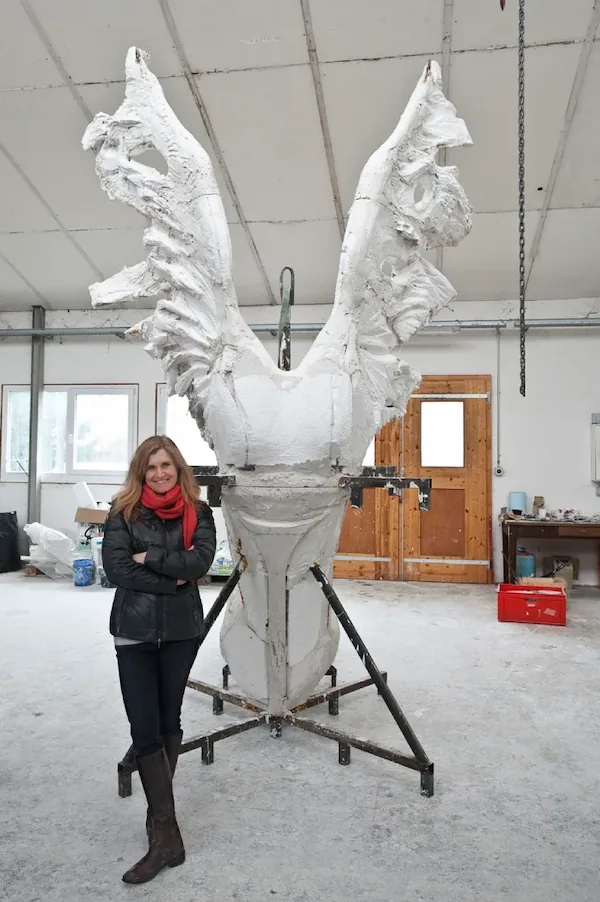
Work on textures and volumes
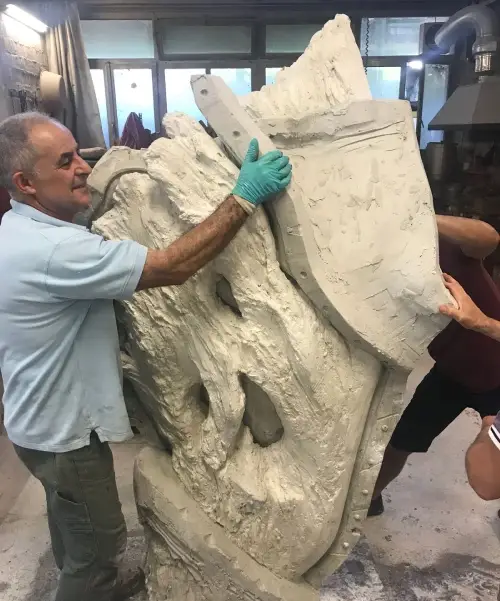
The plaster sculpture is worked in detail. The empty spaces inside the wings serve to stabilize the sculpture, protecting it from the possible force of the wind.
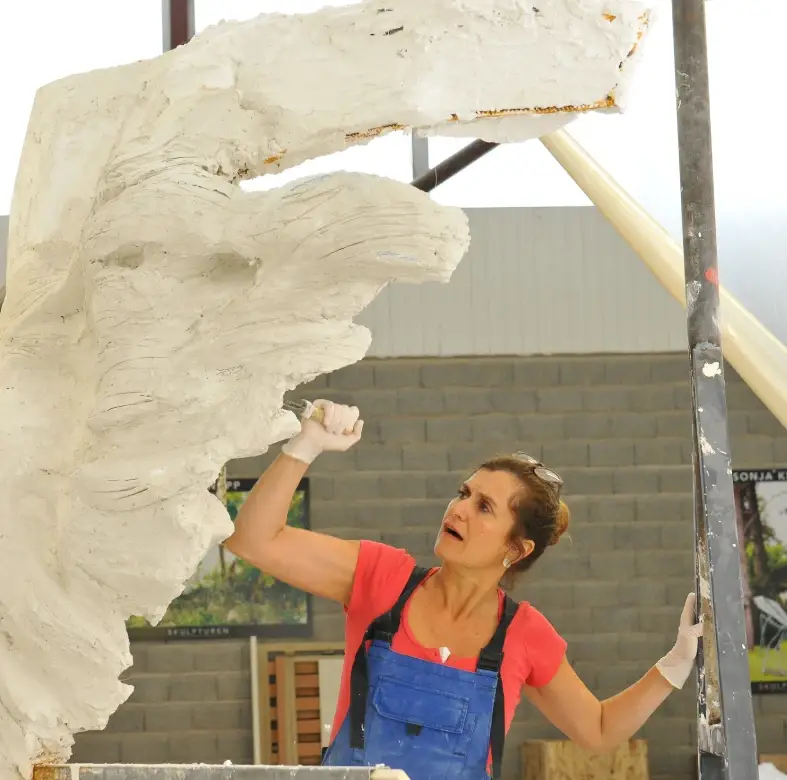
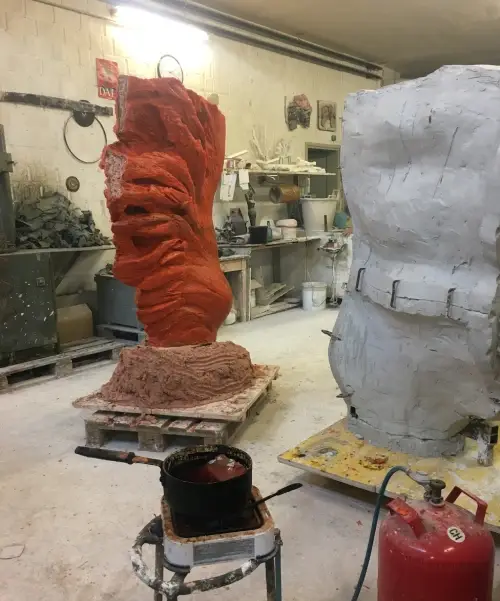
At the end of this phase, the sculpture is copied in wax and made ready for casting in bronze.
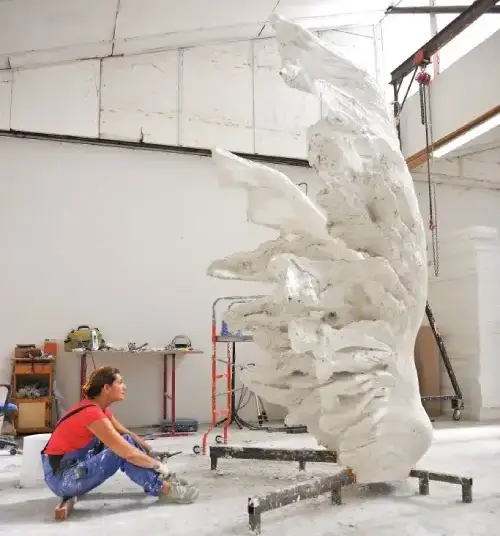
Plaster work ready for the wax
The passage from the plaster model to the wax copy takes place by making the negative mould in silicone and plaster.
The casting
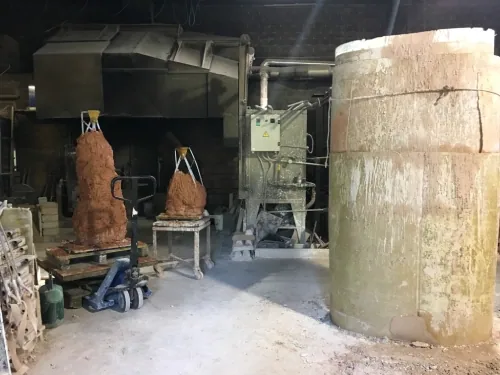
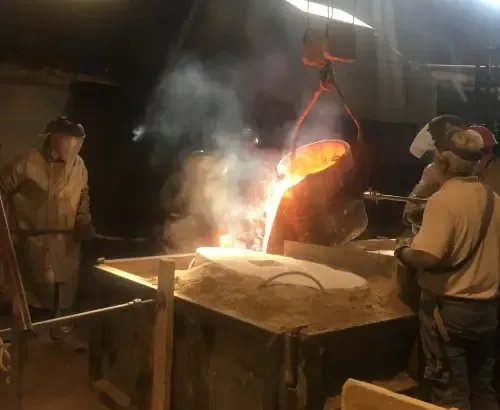
The technique of casting in bronze to lost wax is made by a specialized art foundry in Mendrisio, in the Canton of Ticino, Switzerland.
Assembly of the sculpture
The bronze sculpture is reconstructed by welding the pieces.
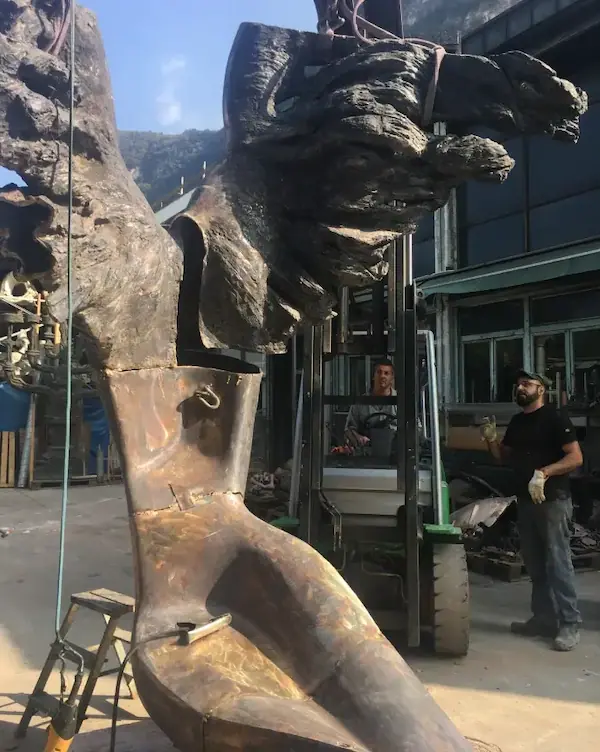
After the final touches we proceed with the patination which corresponds to the color of the sculpture.
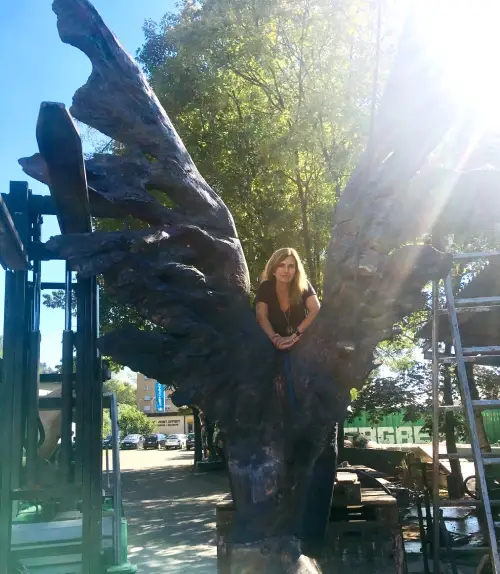
Transport and installation of the work
With trucks and cranes, the sculpture is transported and installed in the garden.
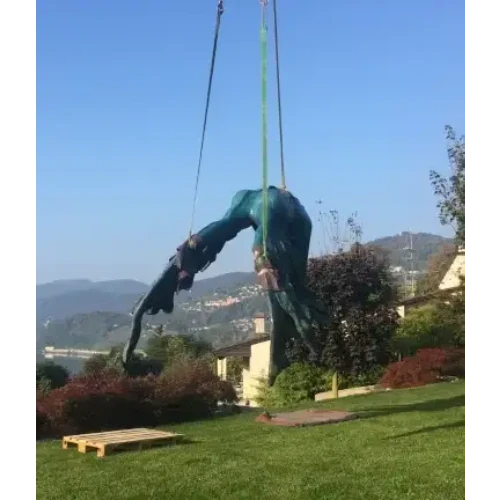
The work is mounted on two steel pivots that allow the circular movement of the sculpture
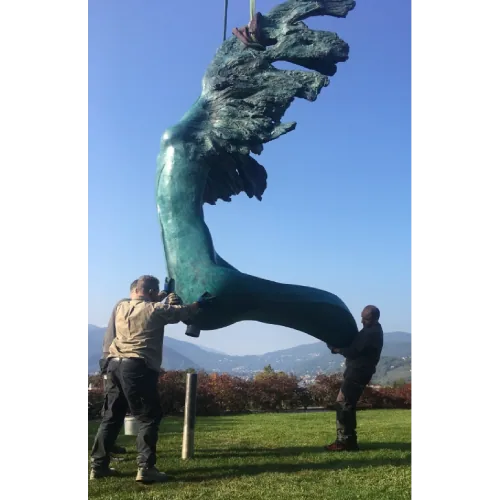
The sculpture in its space
Dimensions: H 410 x W 248 x D 275 [cm].